
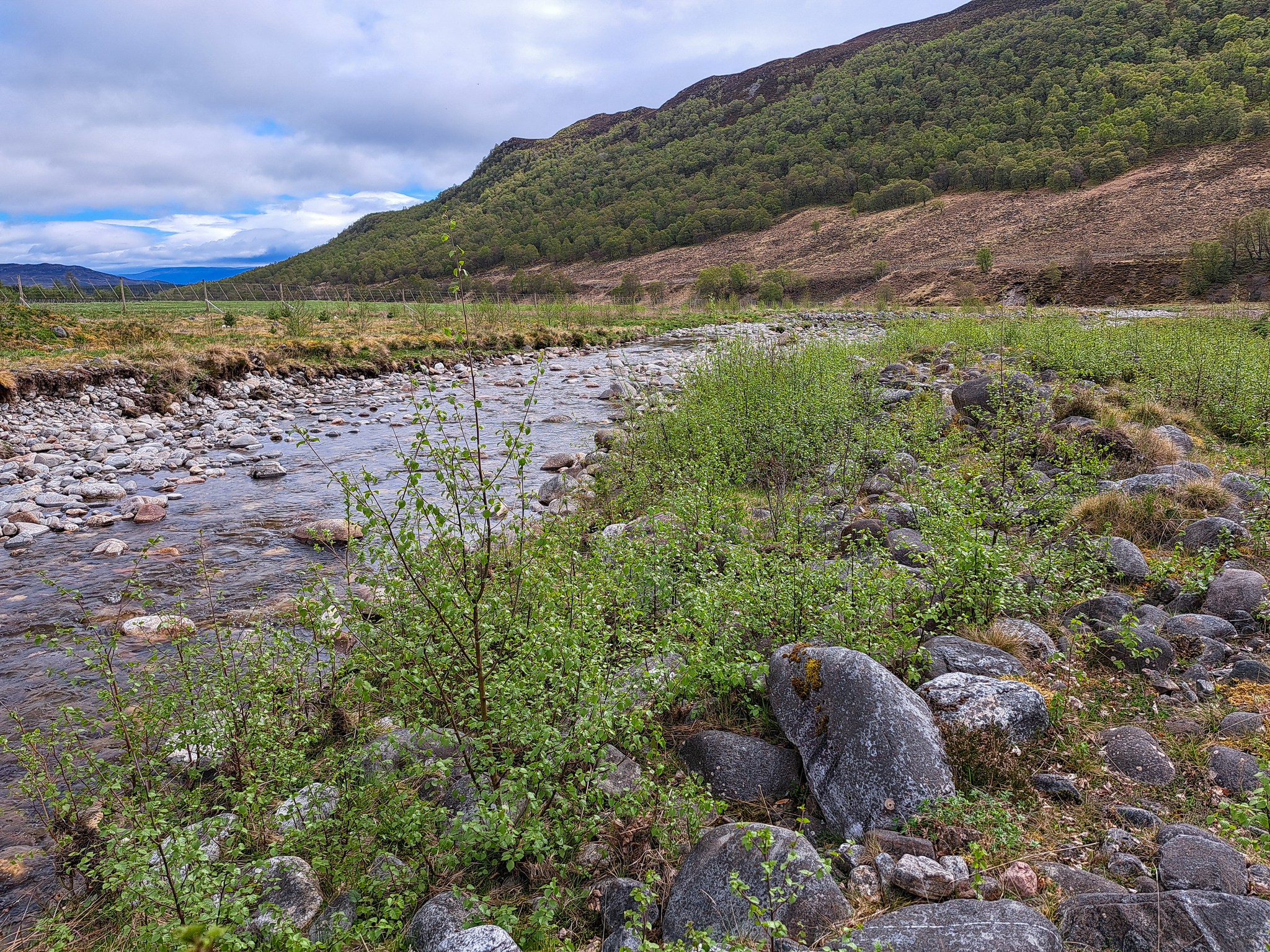
The joint climate and biodiversity crises challenge us all in nature conservation. It’s not surprising that there are differing views on how nature restoration efforts should respond, techniques we should use or the priorities we should follow. We think that’s helpful. It’s unlikely that any of us have all the answers.
These thoughts are intended to help an ongoing discussion of principles that drive our work, for our staff and all our partners and stakeholders.
1. Restoring habitats that will be able to sustain themselves
In a nature emergency, a changing climate and with limited resources, we should focus on time-limited interventions, that will enable natural systems to be more robust and thereafter sustain themselves. Efforts should be prioritised on need and willing partnerships. Sometimes our interventions are justifiably experimental, where balancing risks, we all learn through trying new approaches.
2. Natural succession, dynamism in nature and climate change
Nature doesn’t stand still –perhaps more a process than a noun. It may be a western trait to want to “nail down” nature and habitats that we value and don’t want to change but not even geologies are eternal. Natural succession can see pioneers develop into climax communities and the dynamism we see in “communication habitats” such as riparian systems, are perhaps most literally a “flow” we can all connect with.
George Peterken1 talks about several qualities of naturalness: Original naturalness (before people became a significant ecological factor) – Present naturalness – Past naturalness – Potential naturalness – Future naturalness. “…the historical and conservative approach to (woodland) conservation was only part of the answer.”
The historical perspective (say evidence of previous plant communities or even old river channels) is an important reference point but particularly in a changing climate, likely shouldn’t be our only guide. Often the historical evidence is incomplete and sometimes going back is either not possible or even desirable.
Climate change certainly challenges conservation thinking. Will genetic conservation of remnants always serve us well in supporting future robust habitats? Should we restore a missing habitat and succession, even if it negatively impacts some existing species? Can we balance individual species conservation needs with a desire for more natural, sustainable habitats? Are our legal protections and designations able to recognise natural process and change?
3. Sense of place
Everywhere is different and special. We need to take time to understand each sub-catchment, each river reach and site. Our approaches should be site-specific and we should beware of universal thinking and solutions. For example, Large Woody Structures or leaky dams may be helpful in certain areas but are unlikely to be always appropriate. Natural regeneration without fencing can work in some places but planting is necessary in others.
4. Landscape ecology to species ecology
A holistic approach is important, especially given the interdependences of terrestrial and aquatic habitats.
Nature operates at many different scales – all at once. Big picture Landscape Ecology approaches help us think about habitat patterns, processes and change; about patches, corridors, connectivity and flows. But we also need the understanding of individual species communities and their processes. Some species are mobile; others are not. We need both the big picture thinkers and the site level science and experts: the vision and the detail.
5. People are part of our landscape’s ecology, not separate from it
Many who work this land have a profound sense of those who have gone before, those who farmed, who worked the forest, fished and travelled the rivers and the history and ecology they left behind. We still live and work in a cultural and historic landscape. People are very much part of our ecology and land economy today. People and livelihoods are dependent on this landscape – the custodians that shape our ecologies. Like nature, use of land is dynamic and changing. What future natural and cultural landscapes do we want to see and be a part of?
6. Different perspectives – Listen, learn, respect
We sadly live in quite a polarising time. Sometimes online discussions around nature can get polarised too. But we respect everyone who’s trying passionately to do good things for nature restoration and welcome other perspectives.
We need to be aware of competing objectives, as well as our own biases. We try to be pragmatic – recognising that we won’t always be able to get it 100% right or reach agreement with absolutely everyone. Sometimes compromise means settling for something that’s achievable and better, rather than ideal.
We always need to listen and respect diverging and challenging opinion. That’s how we learn.
[1] Peterken (1996) Natural Woodland Cambridge University Press