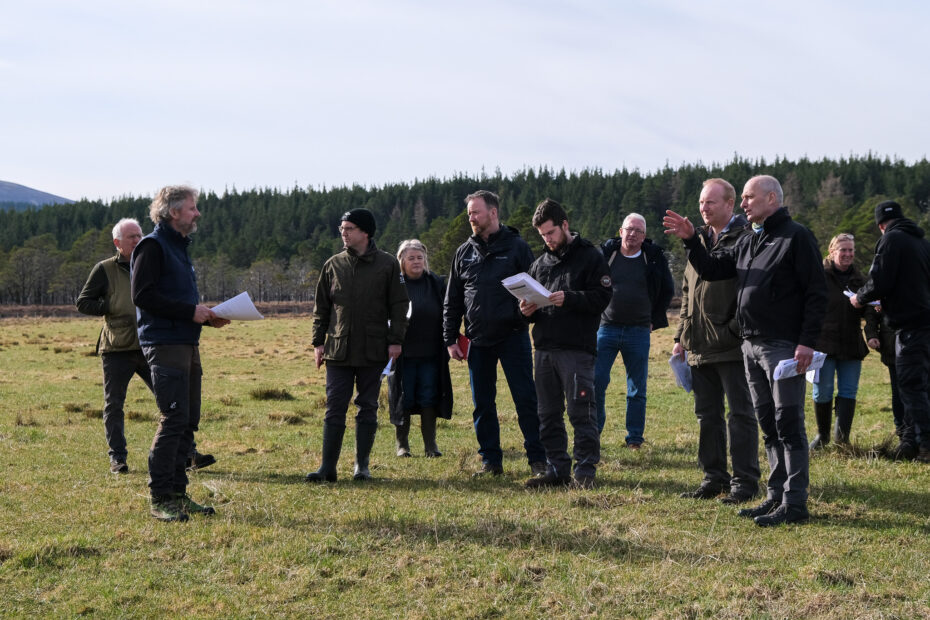
Last week, over 20 farmers from across the Spey Catchment, from Spey Bay to Laggan, attended a practical workshop on Farm Biodiversity Auditing at Clachaig Farm, Nethy Bridge. Organised in partnership with the Cairngorm Crofters and Farmers Community (CCFC) and supported by SAC Consulting and the Soil Association, the event provided a valuable opportunity to look at how biodiversity auditing can help in farm management and the practicalities of completing one.
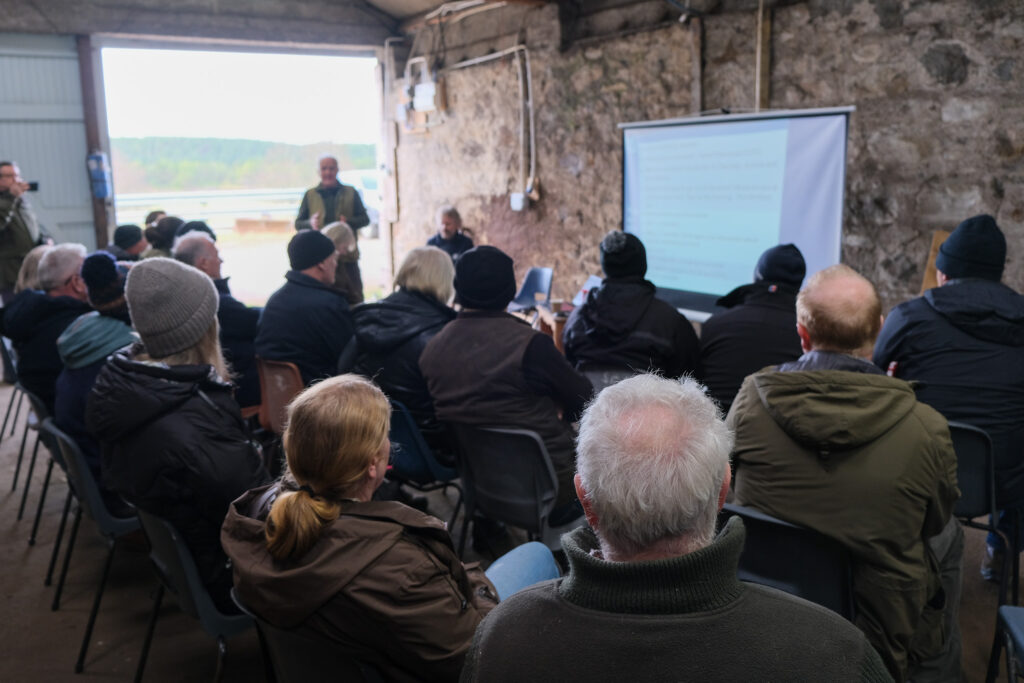
Background on Biodiversity Audits
A Biodiversity Audit (part of the Whole Farm Plan) requires farmers to assign simple habitat classes to all their land. Habitat classes include grasslands, wetlands, woodlands, and hedgerows.
According to the Scottish Government, from 2026, at least half of all farming and crofting funding will be linked to biodiversity and climate outcomes. The audit process will in future help identify management options.
To find out more, see the Whole Farm Plan; please see the full guidance from the Scottish Government here: Whole Farm Plan Guidance.
Practical Learning in the Field
With the majority of the workshop planned to take place outdoors, we were fortunate to have incredible weather on the day. The session focused on attendees working together to complete a ‘mini-biodiversity audit’ of a small area of Clachaig Farm.
This hands-on approach encouraged productive discussions about how to classify different fields and habits and demonstrated how the audit process can be straightforward, beneficial, and adaptable to individual farm needs.
The session covered:
- The process of completing a farm biodiversity audit
- How to classify fields and assess habitat quality
- It’s not difficult to do – we all managed it!
Phil Whitfield from SCI and Paul Chapman of SAC Consulting led discussions on the practicalities of biodiversity audits, with valuable contributions from farmers sharing their experiences.
It was great to chat – to share ideas and experience on a fine day in a beautiful place.
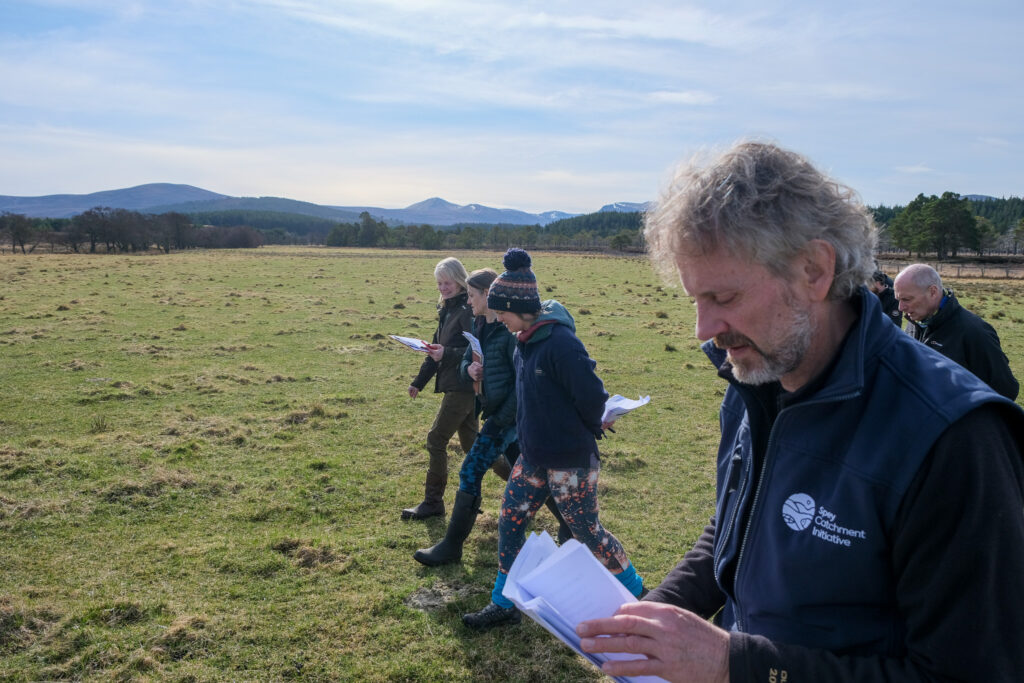
Claichaig is in a beautiful location in the foothills of the Cairngorms. During the session the group agreed that many of their productive fields in the upper catchment would be classified as “Improved” or “Semi-improved grassland” but that it would be worthwhile separately mapping significant areas which are different, such as ”Rush Pasture“.
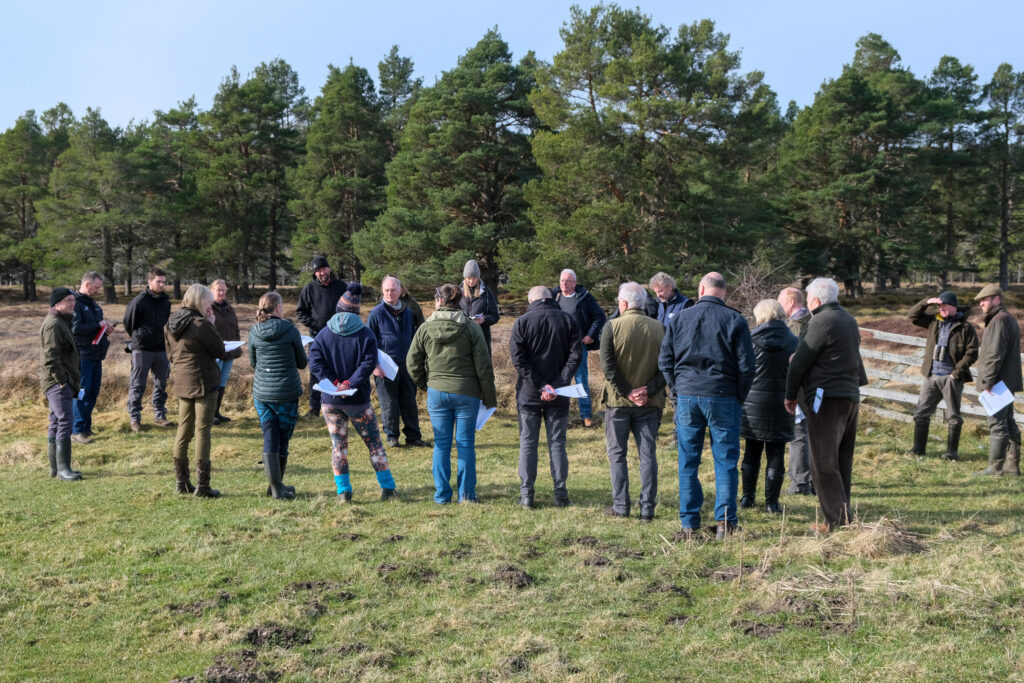
Due to the diversity of different habitats on Clachaig Farm, they often have a number of different habitats within a stone’s throw of each other. In the image above, you can see, from back to front, Natural Woodland, Peatland and Semi-improved grassland.
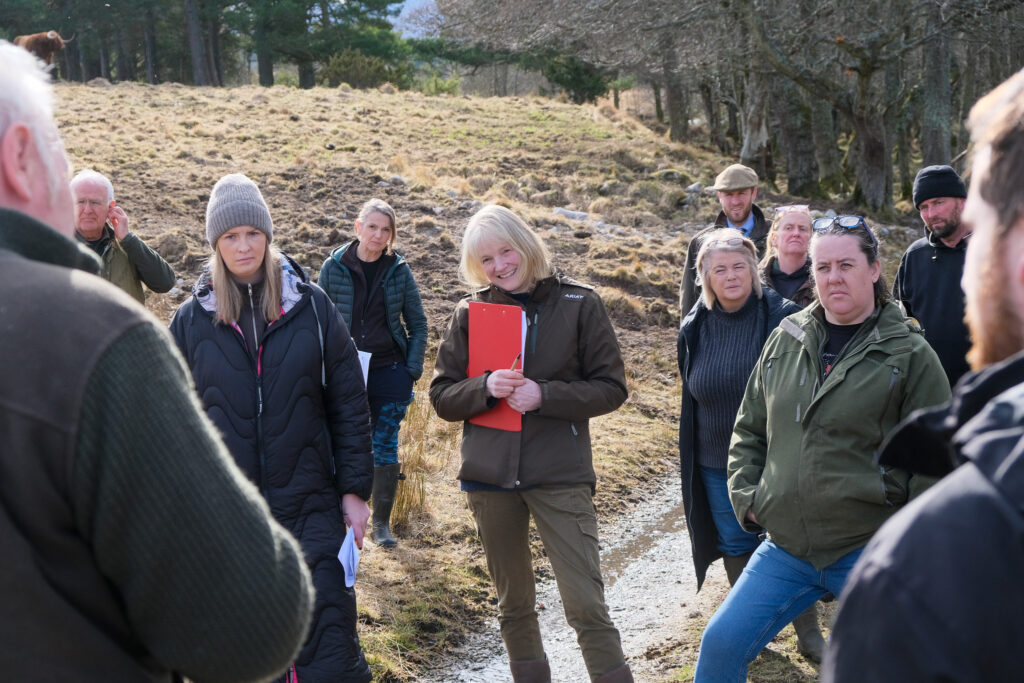
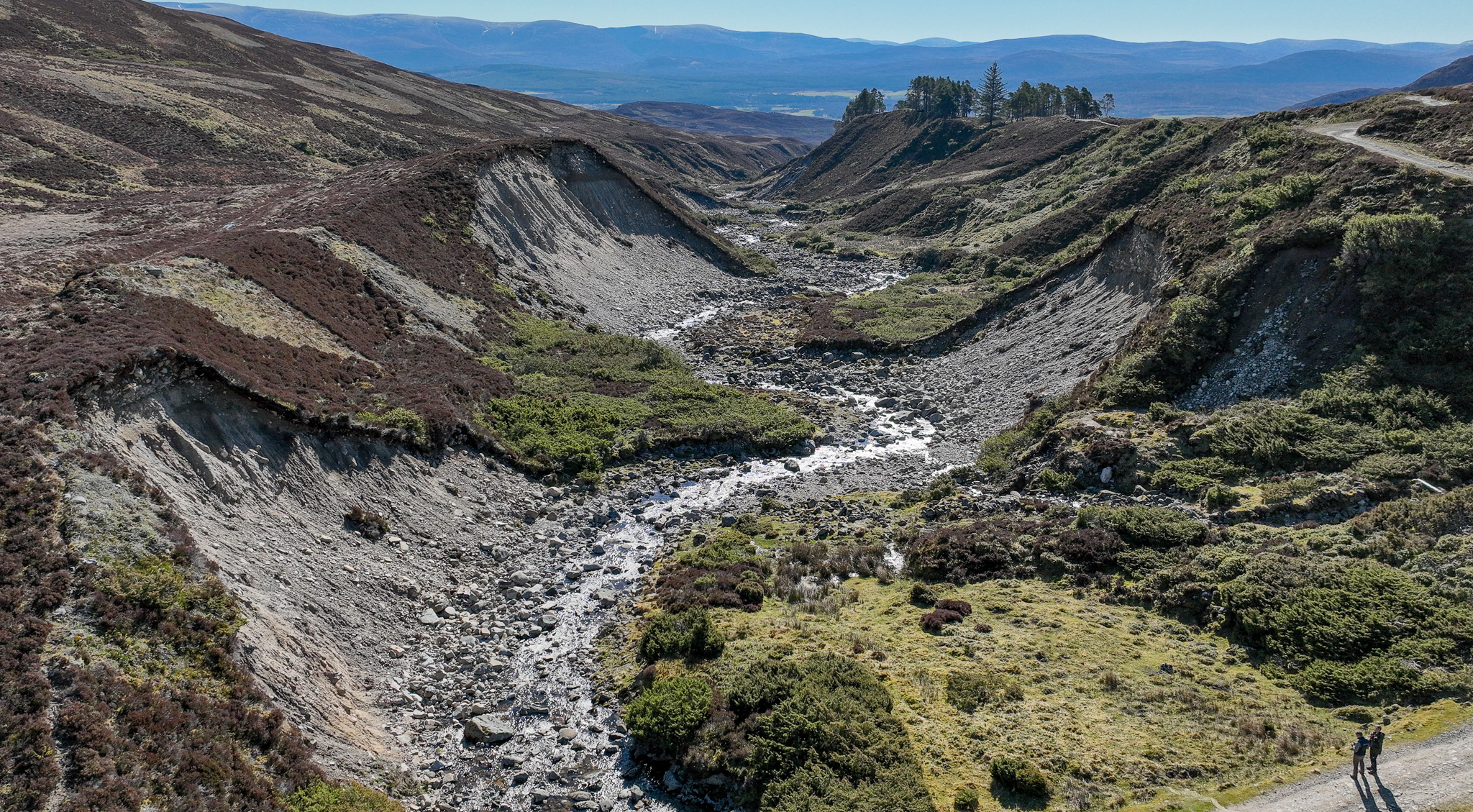
Biodiversity Audits can also be used to map Linear habitats such as Rivers and streams.
Thanks
We would like to extend our sincere thanks to Andrew and John Rafferty for hosting the workshop at Clachaig Farm and for their support in facilitating discussions.
Special thanks also to the Cairngorm Crofters and Farmers Community for collaborating with us to organise this event, Paul Chapman from SAC Consulting for his expertise, and the Soil Association for their support.
We are also grateful to John Kirk and the Grantown-on-Spey Show for providing chairs and tables, and to Lia Smith at Country Bumpkin Bakes for the excellent catering.
Finally, a big thank you to all the Spey Catchment farmers who attended and contributed to a valuable and enjoyable workshop.